- Netter News
- Posts
- Netter News Exclusive, Newsom Ignores Stockton, RICO Case Against State Officials, and More...
Netter News Exclusive, Newsom Ignores Stockton, RICO Case Against State Officials, and More...

Do read these stories and posts and tell us what gets you OUTRAGED the most (and what makes you smile)!
Email comments directly to [email protected]
First off… The Big News 👇
BREAKING NEWS
A Netter News Exclusive: The Story of Buckler Island and Rob Bonta
FAMILIES’ ISLAND SEIZED BY ROB BONTA: FEDERAL AND STATE REGULATORS FACING RICO, TORT, AND WOTUS CHALLENGES
SAN FRANCISCO BAY–DELTA — A Northern California family says their private island was wrongfully seized after years of pressure from state and federal environmental agencies. Now, their legal battle against Attorney General Rob Bonta, the California Water Board, the U.S. Environmental Protection Agency (EPA), and multiple local officials has exploded into a series of high-stakes lawsuits — including a RICO action, a state tort claim, and a landmark Ninth Circuit appeal that could redefine wetlands jurisdiction after the U.S. Supreme Court’s Sackett decision.
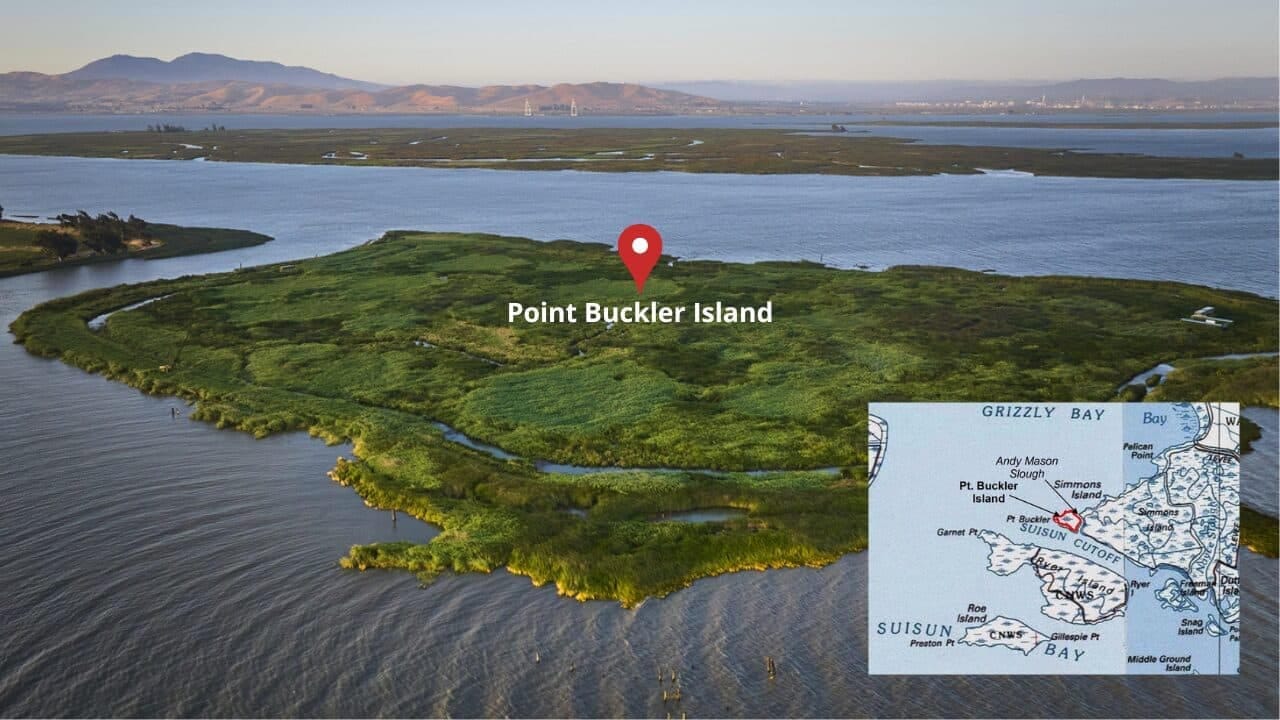
At the center of the fight is Point Buckler Island, a 39-acre, privately owned parcel in the Suisun Marsh. John Sweeney, his wife Jennifer Frost, and their family maintain the island is dry land that the government misclassified as “wetlands” for a decade — allowing regulators to impose millions in penalties, block its use, and eventually force a sheriff’s sale that transferred ownership to the politically connected John Muir Land Trust.
The family argues the seizure was the direct result of regulatory overreach, unlawful enforcement, and a broader pattern of environmental agencies claiming control over private lands they do not own. Their lawsuit alleges that Attorney General Rob Bonta’s office played a role in sustaining these actions, including backing state officials and agencies who treated the island as federally protected wetlands despite a record showing no continuous surface water, no wetland hydrology, and soil hard enough for heavy equipment to operate without sinking.
A Larger Pattern of “Dry Land as Wetlands” in the Delta
The Point Buckler controversy connects to a larger issue the family and outside analysts have raised for years: EPA, the California Water Board, and affiliated agencies have been listing tens of thousands of acres in the Sacramento–San Joaquin Delta as “restored wetlands” that do not actually exist.
Records obtained through public filings show that:
Agencies have claimed roughly 50,000 acres of salmon and smelt habitat have been restored since the early 2000s.
Independent mapping and on-the-ground inspection indicate perhaps 10,000 acres of actual, physically constructed habitat exist.
Tens of thousands of acres listed as “restored” are simply unbuilt projects, dry levee fields, or historically farmed islands with no wetland function.
For years, federal and state regulators have relied on this inflated restoration accounting to justify enforcement actions, mitigation requirements, and grant funding. Point Buckler became a prime example: EPA and the Water Board classified the island as jurisdictional wetlands based on pre-Sackett “significant nexus” theories — even though the island was dry, isolated, and structurally disconnected from tidal flow.
Photographs and soil studies in the record show:
A 2–3 foot water table, far too deep to meet federal wetland hydrology standards.
No continuous surface connection to Suisun Bay.
No saturation meeting the 1987 or 2008 Wetlands Manuals.
Under the U.S. Supreme Court’s 2023 Sackett ruling, these conditions would categorically fail the definition of Waters of the United States (WOTUS).
The RICO Case Against State and Local Officials
In July, Sweeney and Frost filed Sweeney v. Carringer, a sweeping federal racketeering (RICO) lawsuit in the Northern District of California. The complaint alleges:
State judges, county officials, Water Board attorneys, and nonprofit partners coordinated to misclassify Point Buckler as wetlands.
Fraudulent writs, expired liens, and altered title documents were used to pressure the family.
Regulators and county actors used the wetlands designation to justify a forced sheriff’s sale.
The sale transferred the island to John Muir Land Trust, an organization with political ties and grant-making relationships to several defendants.
The RICO action claims years of misconduct: title fraud, bid-rigging, illegal writs, confiscation of property without jurisdiction, and reliance on falsified environmental science produced by contracted researchers and agencies.
The case is ongoing before Judge Jon Tigar, who recently accepted a judicial notice that the Ninth Circuit appeal involving the same property is now active.
Tort Claim Against Solano County and Attorney General Bonta
Separately, Sweeney and Frost filed a state tort claim against:
Solano County
Sheriff Thomas Ferrara
Former County Counsel Bernadette Curry
The Suisun Resource Conservation District
And Attorney General Rob Bonta, for the actions of deputies and lawyers from his office
The family alleges:
Abuse of process
Wrongful seizure
Negligence
Violation of due-process rights
Interference with existing maritime and business operations
Retaliatory enforcement and failure to correct known scientific errors
California must respond to tort claims within specific deadlines. Failure to do so triggers a two-year filing window for the lawsuit. The family has announced their intention to file suit in a venue outside Solano County due to concerns about local conflicts and prior involvement of county officials.
The Ninth Circuit Appeal: A Major Post-Sackett Test Case
The most nationally significant component of the family’s fight is now at the U.S. Court of Appeals for the Ninth Circuit. On November 24, they filed a 300-page Opening Brief arguing:
The EPA and Army Corps had no Clean Water Act jurisdiction over Point Buckler.
The district court used outdated tests now rejected by Sackett.
The agency’s entire case relied on wetlands standards that no longer exist.
Dry land cannot be regulated as “waters of the United States” without a continuous surface connection.
The government’s enforcement actions, fines, and restoration demands were unlawful from the start.
The Ninth Circuit appeal — United States v. Sweeney, No. 25-2498 — is now being called by observers the first major Sackett test case in the western United States. It touches not only Point Buckler but also the broader question of:
How much of the Delta, Suisun Marsh, and Central Valley agriculture is actually subject to federal wetlands law after Sackett?
Some legal analysts believe the case could become a controlling precedent for the region.
A National Conversation About Environmental Overreach
To Sweeney, his family, and their supporters, the story is simple:
“Our private island was seized through bad science, expired writs, and regulatory theories the Supreme Court has already rejected.”
To regulators, it is a dispute about unauthorized levee work and habitat impacts — but that narrative weakens under Sackett, which eliminated the wetland theories they relied on.
With three simultaneous legal fronts —
RICO in federal court, a state tort action, and a Ninth Circuit WOTUS appeal —
The case has become a flashpoint in California’s long-running battle between private property owners and expansive environmental regulation.
And if the Ninth Circuit rules that Point Buckler is not federally regulated water, every action taken against the family may unravel, setting the stage for one of the largest takings claims in recent California history.
By John Sweeney
Minimum Wage to Increase in CA
WHAT YOU NEED TO KNOW:
California’s minimum wage will increase to $16.90 per hour on January 1, 2026, reflecting an automatic annual adjustment based on inflation.
The state ties these increases to the Consumer Price Index to help wages keep pace with the cost of living.
This 40-cent raise affects the baseline wage across the state, though many local jurisdictions already enforce higher local minimums.
The increase also impacts exempt employee salary thresholds, raising the minimum salary for full-time exempt workers to over $70,000 annually.
Employers must adjust payroll systems and budget planning to reflect the new wage floor and maintain compliance.
While the hike may appear modest, it signals continued upward pressure on labor costs statewide.
California Loses One Taxpayer Per Minute

Florida is gaining new taxpayers at a rapid pace—about one every two minutes—while California is losing them at nearly the same rate, with one taxpayer leaving every 1 minute and 44 seconds.
According to the National Taxpayers Union Foundation’s analysis of IRS data, states like Florida, Texas, and North Carolina are seeing significant taxpayer gains due to favorable tax policies, such as no state income tax and a pro-business environment.
Florida alone is generating an estimated $4 billion in new annual tax revenue from these newcomers.
Meanwhile, states like California, New York, and Illinois are losing large numbers of taxpayers and attempting policy changes—like easing zoning restrictions or reducing income taxes—to slow the exodus.
The COVID-19 pandemic accelerated this migration trend, with many Americans now able to work remotely and choosing states with lower costs and better governance.
California, for example, lost $29 billion in taxpayer income in 2020, while Florida gained $39 billion during the same period.
Follow Up On 911
New Report Warns Consequences of an Oil Pipeline Shutdown Would ‘Cascade Across the State’

WHAT YOU NEED TO KNOW:
A new report warns that shutting down California’s oil pipelines would trigger a cascade of economic and supply‑chain problems statewide, extending far beyond energy costs.
The article argues the pipelines currently carry a critical share of the state’s fuel supply, meaning any disruption would likely result in gasoline shortages, long lines at the pump, and rising energy prices.
It also warns that industries reliant on stable fuel and energy — like agriculture, transportation, and manufacturing — would face steep cost hikes.
Supporters of the pipeline closure attempt to push green‑energy goals and emissions reductions, but the report cautions that California’s infrastructure and supply‑chain networks aren’t prepared to absorb such shocks.
Eliminating pipeline flow without a realistic alternative risks destabilizing everything from household budgets to food prices.
The article concludes that unless policymakers plan for massive transitional infrastructure and investment, shutting down pipelines could cause economic damage far larger than the environmental benefits.
Newsom Skips Stockton For Lunch in New York

Weingart's $27 Million Dollar Homeless Heist: LA's Pay to Play Pipeline Strikes Again - And the Trail of Donations Tells An Ever Darker Story | The Current Report

WHAT YOU NEED TO KNOW:
The article describes how taxpayer‑funded grant money was used by Weingart to purchase a former senior‑living facility in West L.A. for $27.3 million — a property that just weeks earlier had sold for roughly $11–12 million, suggesting a massive markup and possible profiteering.
The deal was structured so that the original seller remained secret under a confidentiality clause, and the public was not told who actually sold the property to Weingart.
A subsequent federal investigation and criminal charges have been filed against the original buyer, Steven Taylor, alleging bank‑fraud and money‑laundering tied to this and other property flips using Homekey and other homelessness‑relief funds.
Audit reviews show that despite receiving over $100 million in taxpayer funds, Weingart had repeatedly failed to properly account for those funds, miss several audit‑submission deadlines, and lacked adequate financial‑management infrastructure.
This raises serious concerns that homeless‑relief dollars were diverted or misused — effectively funding a “pay‑to‑play” pipeline benefiting politically connected developers and nonprofits instead of helping the needy.
The article argues that this scandal exemplifies systemic corruption in California’s homelessness‑housing apparatus, where oversight is weak, accountability is missing, and the public bears the financial burden of inflated deals.
Guest Column
Plants Over People: How California Let the Palisades Burn
WHAT YOU NEED TO KNOW:
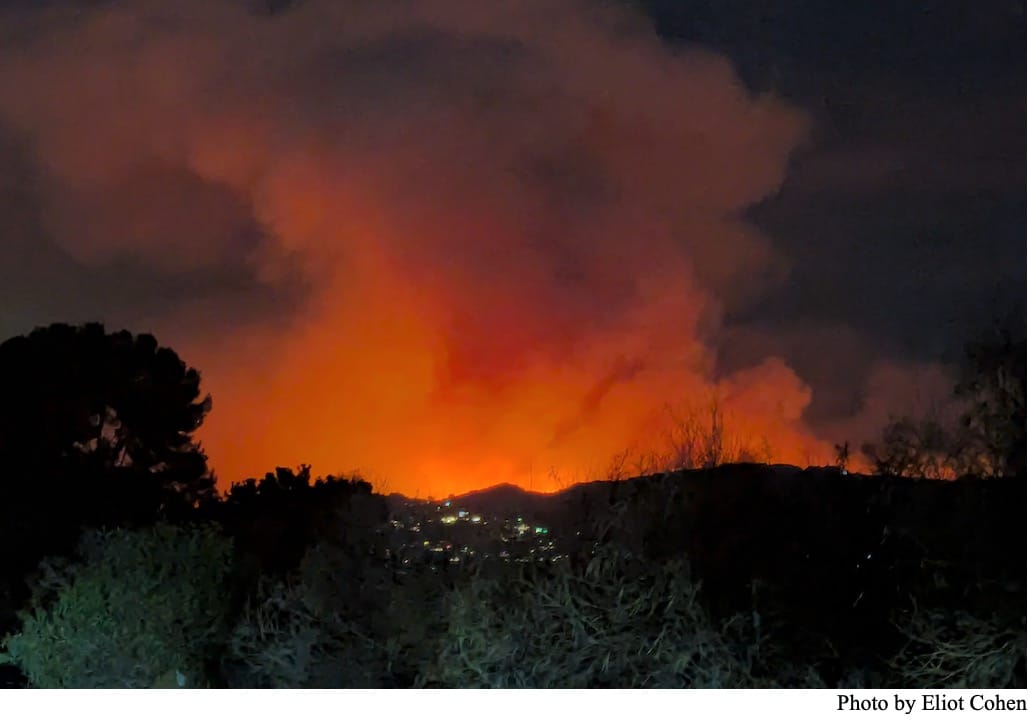
After the first small blaze in early January, state officials with California State Parks allegedly blocked firefighters from using bulldozers, trenching, or doing full “mop‑up” work around burn areas — citing protection of native plants.
Internal documents and firefighter reports suggest those restrictions were enforced even when crews warned the fire was still smoldering, and the fire hazard was mounting.
Roughly six days later, embers from the original fire reignited under windy Santa Ana conditions and ignited what became the catastrophic Palisades Fire — which destroyed thousands of homes and killed numerous people.
On top of the “plants over people” restrictions, the area’s firefighting water supply was compromised: a critical reservoir was found empty, crippling the ability to fight the blaze effectively when it exploded in size.
The article argues this was not a “natural disaster,” but a preventable chain of bureaucratic negligence — where environmental overreach, mismanagement, and regulatory rigidity led directly to the destruction of lives and property.
In sum, what was billed publicly as an unavoidable wildfire was, according to the article, a tragic outcome of policy failures and prioritizing plant‑protection regulations over human safety.
BLACK FRIDAY SPECIAL EXTENDED
Get Healthy, Black Friday Special 👇
Click on Picture Below to See Offer:

DON’T FORGET THESE PETITIONS
Voter ID Initiative To Be Put On The Ballot In 2026
The Howard Jarvis Petition to Raise The Threshold From 50% Vote to 2/3rds Vote to Raise Local Taxes
School Choice (CEO ACT) 17,000 a year is put in an account for each student & would be put in an education savings account for TK through 12.Any leftover money can be used for college or trade school.
Sign The Petition by Clicking Below👇


When federal prosecutors dropped a scorching 20-count indictment on Dana Williamson last week, accusing Gavin Newsom’s former Chief of Staff of siphoning off Xavier Becerra’s old campaign account for luxury hotels, designer wardrobes, and family getaways—most Californians assumed Newsom would sprint in the opposite direction. This is, after all, the same governor who never misses a chance to moralize about “accountability” and “public trust” when the cameras are rolling.
Wrong.
Not even two days after the indictment went public, a freshly minted SpotFund quietly appeared: “Dana Williamson Legal Defense Fund.” Goal: $100,000. Tone: dripping with Sacramento self-pity about “protracted battles” and “extremely expensive lawyers.” And the organizer? Steven Maviglio – Newsom’s longtime fixer, spin doctor, French-Laundry-tier insider, and the guy who’s been orbiting Newsom’s political universe since his Lieutenant Governor days.
Raccoon DRUNK in Virginia Liquor Store
School District in Trouble

WHAT YOU NEED TO KNOW:
Sacramento City Unified School District is confronting an $80 million budget shortfall, forcing the district to cut 60 administrative positions to stabilize finances.
The deficits stem from declining enrollment, increasing costs, and structural budget pressures that the district says are unsustainable long‑term.
These job cuts come after previous rounds of spending reductions, but district officials say this round is unavoidable if the district hopes to avoid deeper financial trouble.
Teachers and classroom staff remain untouched — the cuts are limited to high-level administrative and support roles.
District leaders emphasize they will restructure operations in a leaner way to preserve core educational services for students.
The article frames this as a harsh but necessary decision to prevent further degradation of school quality in Sacramento in the face of persistent fiscal crisis.
The State Found Red Flags in Nursing Homes But Licensed Them Anyway. 4 Things to Know
WHAT YOU NEED TO KNOW:
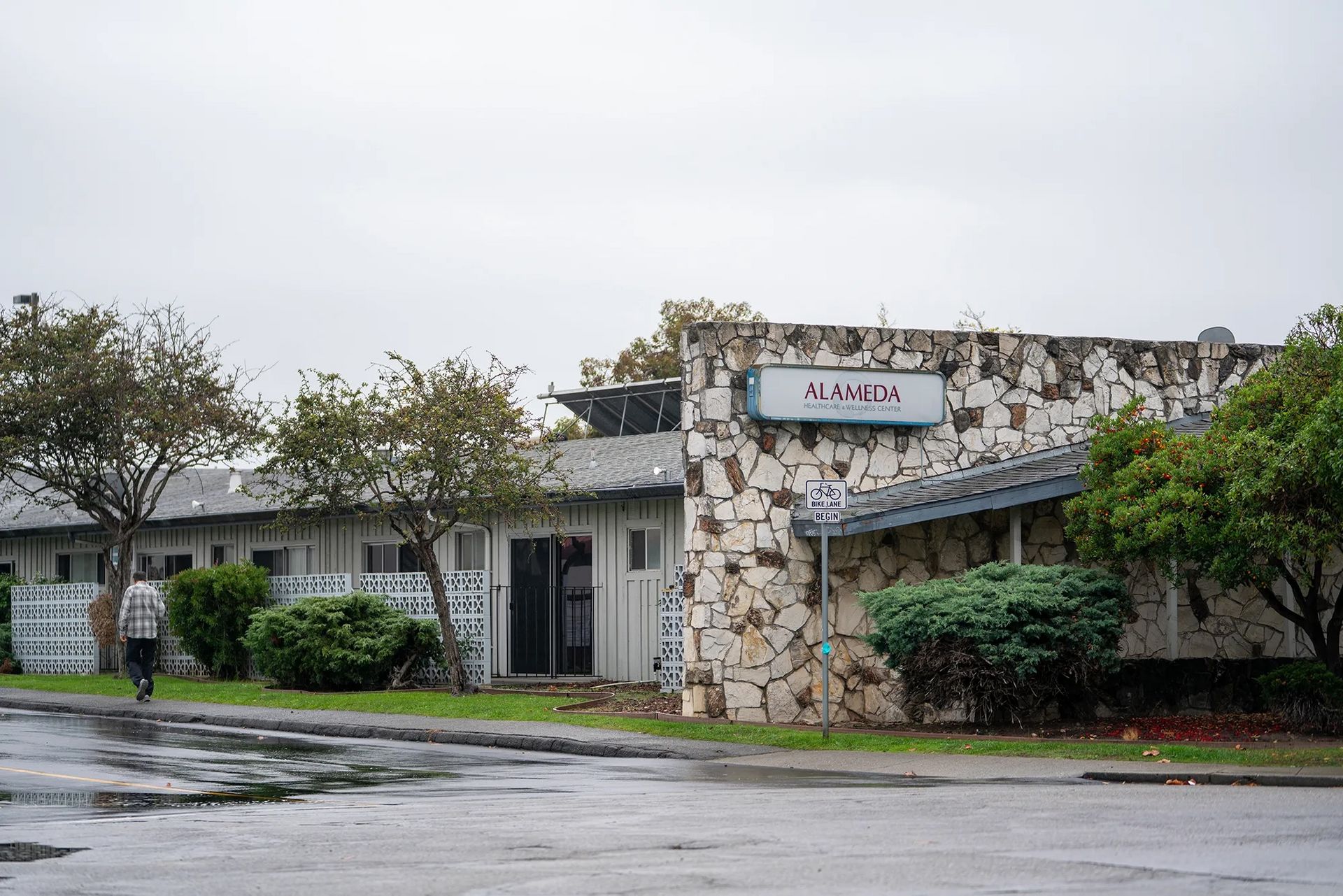
California regulators licensed dozens of nursing homes even after finding red flags — including records of neglect, repeated citations, and prior license denials.
One of the largest operators involved is Shlomo Rechnitz, whose network of 78 facilities has consistently under‑performed compared with statewide standards: over the past three years, those homes averaged about 12.4 citations each, double the state average of 6.1.
Some homes were allowed to continue operating for years while their license applications remained “pending,” and even five homes kept open after licenses were denied.
Since the state granted many of those licenses in 2023 — just before new regulations would have tightened oversight — numerous lawsuits have followed, alleging negligence, abuse, wrongful death and patient harm.
In one recent case, a resident at a facility owned by Rechnitz was awarded $2.34 million after repeated falls and injuries, while other pending lawsuits involve claims of patient deaths, over‑medication, sexual assault and understaffing.
The article frames this as evidence that the state system meant to protect nursing home residents is failing — allowing dangerous operators to stay open while putting vulnerable seniors at grave risk
No matter where you are Thursday… tune in here!
The underbelly of California politics turned inside out this week.
GO CALIFORNIA with @taxfighter7 @nettermike and KURT on CFR.

Follow Mike Netter and connect to WATCH our VODCAST
Help to take back California to get rid of the inept and root out the evil.
Small donations make a large impact.

Spread the word! Share Netter News with your family & friends.

Reply